
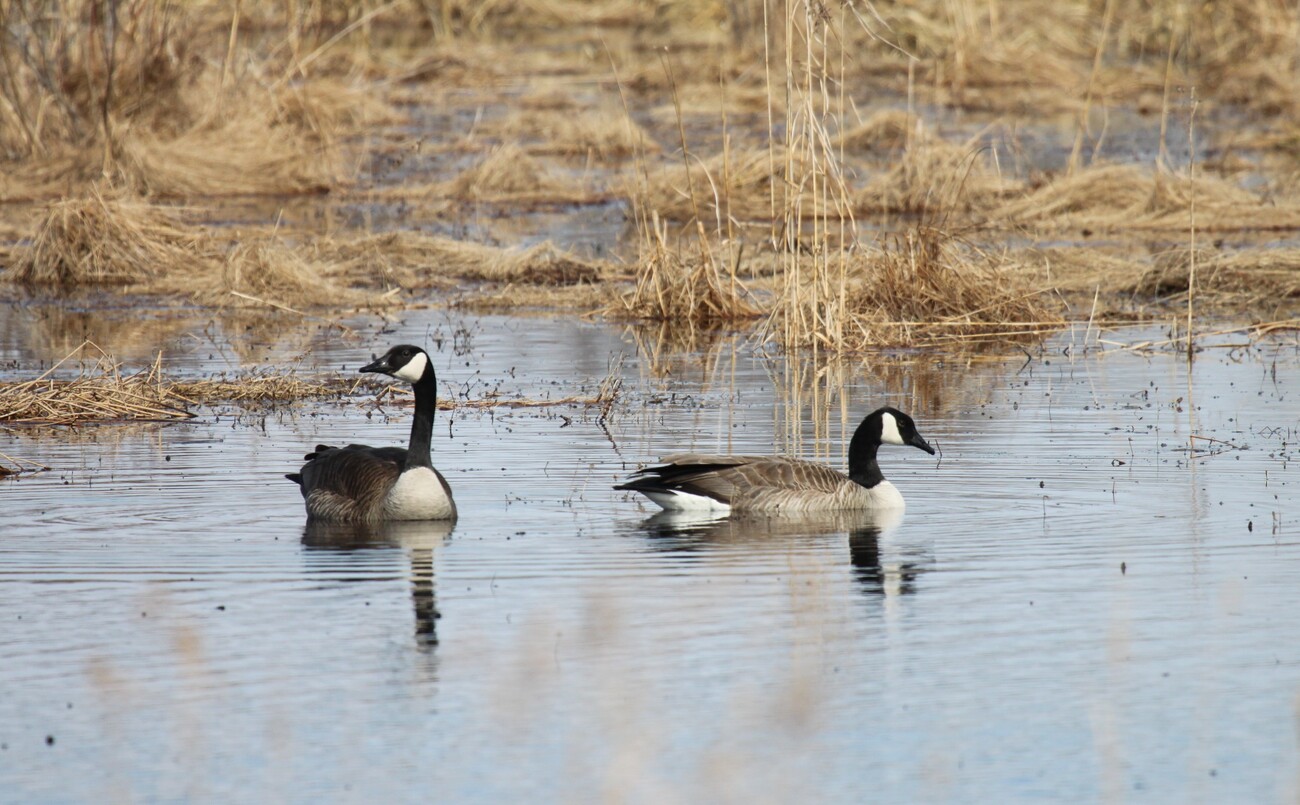
Waterfowl Hunting is one of the more popular types of hunting in Wisconsin.
Labor Day has come and gone. The summer vacation season is over, but the most important season of the year is about to begin. Sorry, Packer’s fans, despite the Packers' great start, it's not football season, it's fall hunting and fishing season. When September rolls around, hunting seasons begin to open and eventually close. Some of the first hunting seasons are already underway; early goose, bear, early teal, and now small game and archery deer. Hunters have a smorgasbord of possibilities for adding wild protein to their diet.
Additionally, Fall is a great time to catch some fish. Walleye fishing, in particular, really picks up in the fall. It's also a prime time to catch muskies, or take advantage of the spawning runs from Lake Superior and Michigan. Fall is truly the best season of the year,
Since it's time to stock up on all three food groups, furred, feathered, and finned, for the approaching winter, the question is, where can one go to take advantage of nature’s larder? Fortunately, our ancestors were very wise and visionary people who worked to set aside thousands of acres of public land for all to enjoy, and use for multiple purposes, including hunting and fishing. Conservationists, environmentalists, and land trusts are still working to create new public lands for all to use and enjoy. Public lands are our birthright.
Dunnville Wildlife Area, known as “The Bottoms” around here, is the largest wildlife area in the county with 4,200 acres. The Bottoms is part of the Lower Chippewa River State Natural Area, which includes much of the land adjoining the Chippewa River from Carryville to the Mississippi River. The Bottoms has a wide variety of habitat types, including hardwood bottomlands, prairies, pine barrens, wetlands, and sloughs. The varied habitat also means a wide variety of game can be found in the Bottoms. Deer, waterfowl, and turkey top the list. The area is also a DNR stocking location for pheasants. The birds are released the week before pheasant season opens, making the Bottoms a very popular spot for pheasant hunting. First-time pheasant hunters need to watch the time, as pheasant hunting closes at noon for most of the season. Hunters can also pursue squirrels and rabbits. For wildlife watchers, the Bottoms is also a popular destination. The Chippewa River is part of the Mississippi River flyway, so lots of migrating species pass through.
The Red Cedar River features a series of small wildlife areas that offer quality hunting opportunities. The delta that is formed by the Red Cedar River flowing into Lake Tainter is a great place to duck hunt. The many channels and backwaters hold lots of ducks. A short distance upriver lies Russian Slough, the Red Cedar River Savanna State Natural Area, and Dobbs Landing. Russian Slough is owned by Dunn County. The State Natural Area is a DNR property, and Dobbs Landing is the property of the Dunn County Alliance. All three properties adjoin and are open to hunting and fishing. Altogether, there are about 500 acres of land for the public to utilize. Some of the land is uplands, but much of it is river bottoms, swamps, and sloughs. A canoe is a handy way to navigate the area. Waterfowl, turkey, and deer are in the area. The fishing from the bank in Russian Slough can be very good.
Big Beaver Creek is northwest of Wheeler-a, a bit north and east of the junction of County Highways FF and F. Beaver Creek is 424 acres of woodland, lowland, and grassland. Small game, deer, and turkey hunting top the list for hunters.
Muddy Creek Wildlife Area is located about seven miles east of Menomonie. Highway 12 bisects the northern third of the wildlife area. Much of Muddy Creek, also known as “The Elk Mound Swamp,” is open grassland or wetlands. The 4,100-acre area stretches from I-94 to County Road E. It was once the site of a wild pheasant restoration project, and a few wild pheasants are still in the area. The DNR does not stock pheasants at Muddy Creek. There are multiple ponds and wetlands for waterfowl hunting. There are a few deer in the area, but they are not plentiful.
For the adventurous hunter, going “up North” is always an option. The Chequamegon-Nicollet National Forest is the premier destination for adventure in Northern Wisconsin. The Forest has 1.5 million acres of public land open for adventure. The forest is divided into multiple units that stretch across the state from the border with the Upper Peninsula to Ashland and Bayfield regions in the north. The southern border runs close to Highway 64 and is near Mountain in the east and Perkinstown in the west. The forest has five wilderness areas ranging in size from 4,292 acres to 18,188 acres for the truly adventurous outdoorsman or woman to pack in a camp and hunt away from much of civilization. The Forest also has 70 hunter hiking trails that are managed as linear openings for hunters to mosey on while pursuing game. Campgrounds abound in the Forest for setting up a base camp. And dispersed camping is possible anywhere intrepid hunters would like to set up a camp and hunt. Wisconsin’s premier bear hunting areas are centered on the Forest. The Chequamegon-Nicolet has traditionally been a go-to area for grouse and deer hunting. However, deer populations are at low numbers currently. Turkeys have now moved into the north woods and can be found in the Forest. Fall fishing is very good on the numerous lakes in the National Forest. Well-known walleye lakes, such as Namekagon, have campgrounds and landings conveniently located on the shores of the lakes. Additionally, the counties with National Forest land often have extensive tracts of county forest land, providing more hunting opportunities for hunters.
Fishing the fall spawning runs is extreme fishing. The water and weather are cold, and the fish can be enormous. September and October are prime months for the runs of brown trout, chinook, and coho salmon runs. The Brule is the most well-known river for fishing the fall spawning runs. Because it is so heavily fished, there are special regulations for the river. In Bayfield County, other rivers that see good fall spawning runs include the Flag, Cranberry, and Sioux, as well as Pikes Creek and North Fish Creek. Ashland County rivers with spawning runs include the White, Marengo, and Brunsweiller. Steelhead also has a fall run, with the Brule River being the prime location for catching fish. Some other waters that steelhead run up are the Sioux River, Pikes Creek, Cranberry River, and North Fish Creek. November 15th is the most common date for fishing to close on these streams.
There are many local regulations for specific hunting areas and on rivers and lakes for fishing. It is always wise to check the DNR website when planning a hunting or fishing trip. And always remember TAB-K when hunting.
T = Treat every firearm as if it is loaded. Never assume a firearm is unloaded, and never treat it that way, even if you watch as it is unloaded. Make it a habit to treat guns like they are loaded all the time.
A = Always point the muzzle in a safe direction. About 1/3 of all hunting incidents are self-inflicted injuries. That means the muzzle was pointed at some part of the hunter's body. A safe direction is a direction where the bullet will travel and harm no one in the event of an unwanted discharge. There are no accidental discharges with firearms, only unwanted discharges.
B = Be certain of your target, what's before and beyond it. Positive target identification is a must. To shoot at something you only think is a legal target is gambling. In the case of human injury, that means gambling with human life. You must be absolutely certain and correct in judgment before deciding to shoot. Otherwise, it's reckless behavior. In addition to identifying the target, a hunter must know that a safe backstop for their bullet is present in every shooting situation. We don't always hit our target, and, in some cases, the bullet passes through the target. A safe backstop guarantees that no one will get hurt.
K = Keep your finger outside the trigger guard until ready to shoot. If a hunter stumbles with a firearm in one hand and nothing in the other, whatever that person does with their free hand will automatically happen with the hand holding the gun. If a finger is inside the trigger guard, that hand is likely going to close around the pistol grip of the gun and on the trigger, causing an unwanted discharge.
Memberships


Add new comment